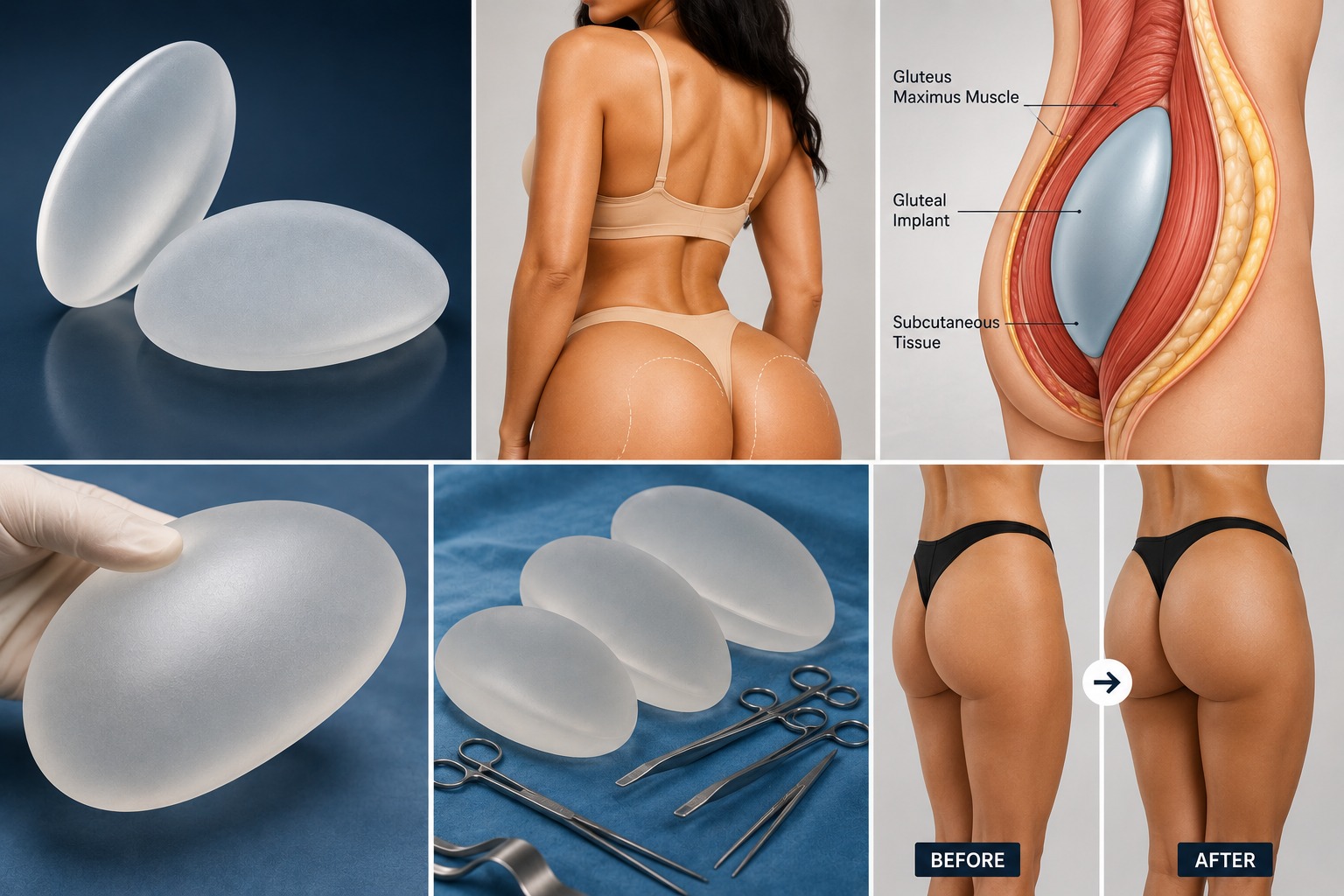
From Vanity to Venture Capital: The $11.1 Billion Gluteal Implant Surgery Boom
The global gluteal implant surgery market is rapidly industrializing into a high-margin, procedure-bundled aesthetic economy where surgical innovation, premiumization, and consumer identity converge.
Trend Analysis
The global gluteal implant surgery market is no longer evolving as a niche cosmetic category. By 2032, it is projected to reach $11.1 billion with an aggressive 18.2% CAGR, making it one of the fastest-scaling opportunities within elective aesthetics and body contouring.
At the center of this expansion is a structural shift in aesthetic consumer behavior. Gluteal augmentation is increasingly positioned not as an isolated cosmetic intervention, but as part of a broader lifestyle and body-optimization ecosystem.
Procedure economics move beyond the implant
Clinics are monetizing this transition through bundled procedures, post-operative care programs, financing models, and integrated aesthetic pathways, significantly increasing revenue per patient and lifetime value.
Cosmetic surgery clinics continue to dominate end-user demand, benefiting from high procedural throughput and growing consumer willingness to finance elective body enhancement procedures.
Material science becomes a competitive battleground
Silicone implants remain the commercial backbone of the industry, accounting for nearly 74.3% of global demand share and generating approximately $2.56 billion in revenue. Their dominance reflects strong clinical validation, surgeon familiarity, and advances in implant durability, contour precision, and biocompatibility.
Hydrogel implants are gaining selective traction with a 17.3% demand share, primarily driven by consumer preference for softer tactile outcomes and more natural post-operative aesthetics. Polymer implants continue to occupy a niche procedural segment at 8.4%.
Material science has become a competitive battleground as manufacturers pursue safer profiles, differentiated anatomical designs, and stronger brand positioning.
Demand concentration signals commercial maturity
Cosmetic enhancement and reconstructive surgery together capture 89.8% of total market revenue, highlighting how aesthetic aspiration and medical reconstruction are increasingly intersecting within surgical practice.
This dual-demand structure creates resilience for providers, enabling revenue diversification across elective and medically necessary procedures.
The aesthetic platform opportunity
Industry leaders including GC Aesthetics, Implantech, Sientra, POLYTECH Health & Aesthetics, and Establishment Labs are expanding portfolios, optimizing surgeon engagement models, and investing in differentiated implant technologies to secure long-term procedural loyalty.
The broader implication is clear: gluteal implant surgery is evolving from a procedure-centric market into a scalable aesthetic platform business. The winners over the next decade will be integrated ecosystem players capable of controlling patient acquisition, procedural innovation, surgeon loyalty, and premium brand perception simultaneously.
For investors and strategic operators, the opportunity is about securing position within a rapidly scaling global aesthetic infrastructure market where innovation velocity, procedural economics, and consumer psychology are becoming deeply interconnected.
Operationalize This Insight
Looking to evaluate aesthetic medicine and medical device opportunities? Preonz turns demand concentration, procedure economics, and competitive positioning into structured market intelligence.