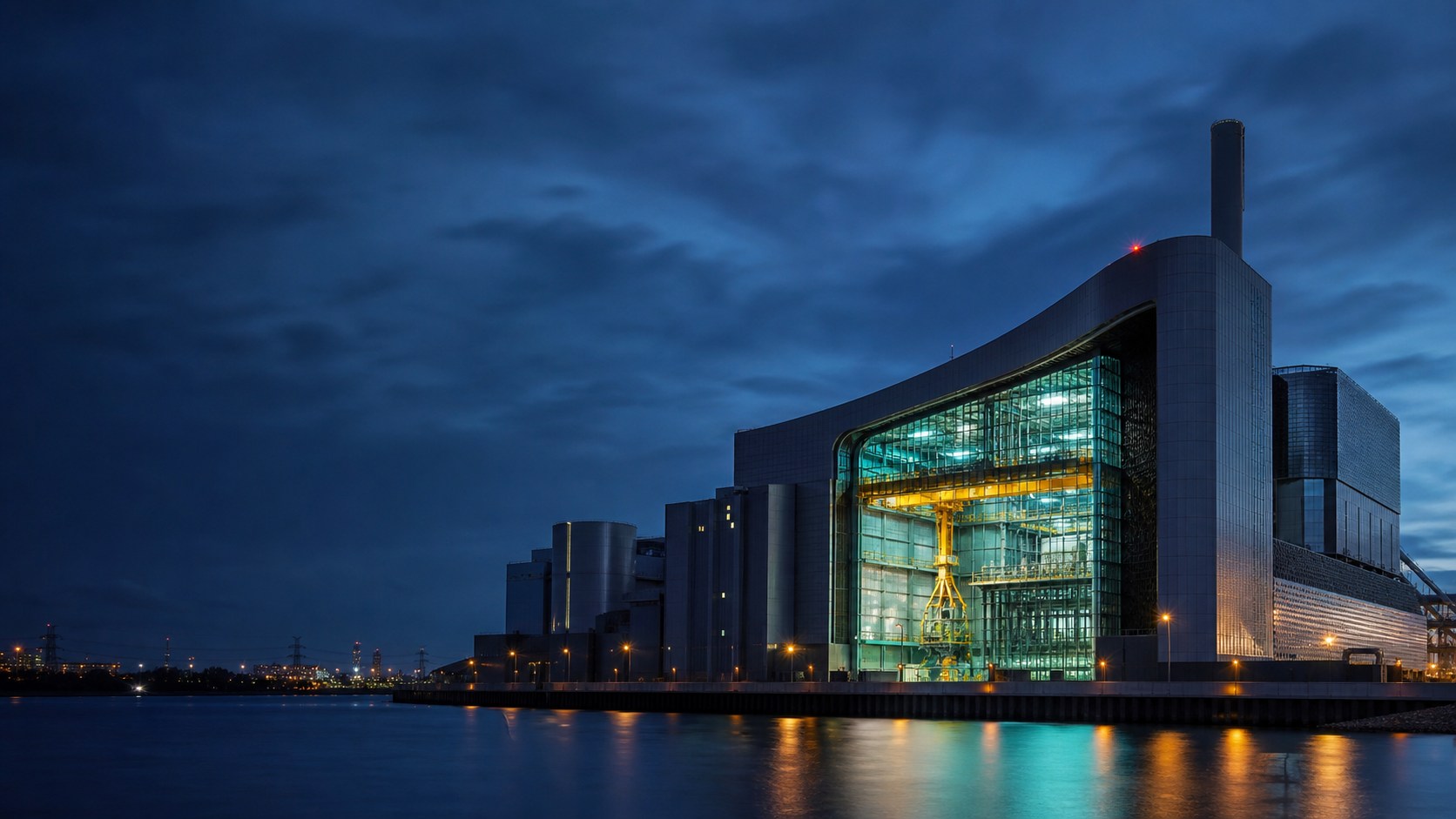
Waste-to-Energy: The Shift from Disposal Problem to Infrastructure Strategy
Waste-to-Energy is emerging at the intersection of waste management and energy generation as cities look for infrastructure that can reduce landfill dependency while recovering usable energy.
Waste-to-Energy (WtE) is emerging as a critical solution at the intersection of waste management and energy generation. As global waste volumes rise and landfill capacity becomes constrained, governments and urban economies are increasingly turning to WtE to reduce waste volume while generating usable energy.
WtE primarily involves the controlled conversion of municipal solid waste into electricity or heat, most commonly through incineration. While not a fully renewable or zero-emission solution, it plays a transitional role in reducing landfill dependency and improving waste management efficiency.
As sustainability pressures intensify, WtE is evolving from a disposal method into a strategic infrastructure component in circular economy frameworks.
Key Takeaways
- Waste-to-Energy converts waste into electricity or heat through thermal and biological processes.
- Incineration of municipal solid waste is the most widely used WtE method.
- Around 13% to 14% of global municipal waste is processed through WtE facilities.
- WtE reduces landfill dependency but is not a fully renewable energy source.
- Infrastructure and environmental concerns remain key barriers to scalability.
What is Waste-to-Energy?
Waste-to-Energy refers to technologies that convert waste materials into usable energy, typically electricity or heat, through controlled processes such as incineration.
In practice, WtE involves collecting municipal waste, removing recyclable materials, and processing the remaining waste through combustion or other technologies. This makes WtE especially relevant in urban regions with limited landfill capacity.
Why Waste-to-Energy is Gaining Momentum
Waste-to-Energy is accelerating due to rising waste volumes, urban density, and energy diversification needs. What was once viewed primarily as a disposal method is now being positioned as strategic infrastructure.
As landfills reach capacity and environmental regulations tighten, WtE offers a controlled alternative that reduces waste volume while recovering value. Energy systems are also under pressure to diversify beyond fossil fuels, making WtE an attractive supplementary source.
- Waste is increasingly being reclassified from a cost center to a value-generating input.
- WtE plants are becoming dual-purpose assets that address waste management and local energy stability.
- Regulatory frameworks focused on landfill reduction and emissions control are supporting WtE adoption.
- WtE can provide predictable local energy output, complementing intermittent renewable sources in hybrid systems.
Global Landscape: Where Waste-to-Energy is Used
Western Europe leads WtE adoption, processing around 40 million tonnes of waste annually. Countries such as Denmark, Sweden, Germany, and France rely heavily on WtE as a primary waste management solution.
In the Middle East, Dubai hosts one of the world's largest WtE facilities, processing 1.9 million metric tons of waste annually and generating 200 MW of electricity.
| Region | Adoption Driver | Market Position |
|---|---|---|
| Europe | Land constraints, regulation | Leading |
| Japan | High urban density | Advanced |
| Middle East | Infrastructure investment | Growing |
| United States | Low landfill cost advantage | Moderate |
Challenges and Trade-offs
While Waste-to-Energy offers advantages in waste reduction and energy recovery, it also involves trade-offs that influence its long-term sustainability and scalability.
WtE processes, particularly incineration, generate carbon emissions and airborne pollutants. Modern plants use emission-control technologies, but WtE cannot be classified as fully clean or zero-emission.
Incineration can reduce the possibility of recovering recyclable materials, especially plastics and paper. This creates tension between energy recovery and circular economy goals.
WtE systems rely on developed waste collection, segregation, and logistics infrastructure. Without consistent waste streams and proper sorting, the efficiency and viability of WtE facilities can be significantly impacted.
Future Outlook (2026-2030)
The Waste-to-Energy market is expected to evolve as both a waste management solution and a supplementary energy source. Urbanization and waste generation will continue to drive demand, particularly in emerging economies.
Advanced technologies such as gasification and pyrolysis will gain traction as they offer improved efficiency and lower emissions compared with traditional incineration.
Integration with circular economy models will become critical, ensuring that WtE complements rather than replaces recycling efforts.
PREONZ Perspective: Strategic Implications
Waste-to-Energy is reshaping how waste is perceived within the global economy, shifting from a disposal challenge to a resource optimization opportunity.
Enterprises and governments will increasingly adopt hybrid waste management models that combine recycling, WtE, and landfill optimization. Regulatory scrutiny will also intensify, pushing operators toward cleaner technologies and stricter emissions controls.
Infrastructure will define WtE scalability. Regions with established waste collection and energy systems will lead adoption, while others may face structural barriers. Waste-to-Energy is not just about managing waste. It is about redefining value extraction in resource-constrained environments.
Frequently Asked Questions
What is Waste-to-Energy?
Waste-to-Energy is the process of converting waste materials into usable energy, typically electricity or heat, through controlled technologies such as incineration.
Is Waste-to-Energy renewable?
WtE is not considered fully renewable because it relies on finite waste inputs and produces emissions, although it can reduce landfill usage.
How does Waste-to-Energy work?
WtE works by burning or processing waste to generate heat, which is converted into steam and used to produce electricity through turbines.
What are the main benefits of WtE?
Key benefits include waste volume reduction, energy generation, and reduced reliance on landfills.
What are the risks of Waste-to-Energy?
Environmental concerns, high infrastructure costs, and limitations in recycling are the primary risks.
Waste-to-Energy is becoming an infrastructure decision, not only a disposal choice. PREONZ helps teams evaluate where circular systems, energy resilience, and regional infrastructure constraints create strategic opportunity.