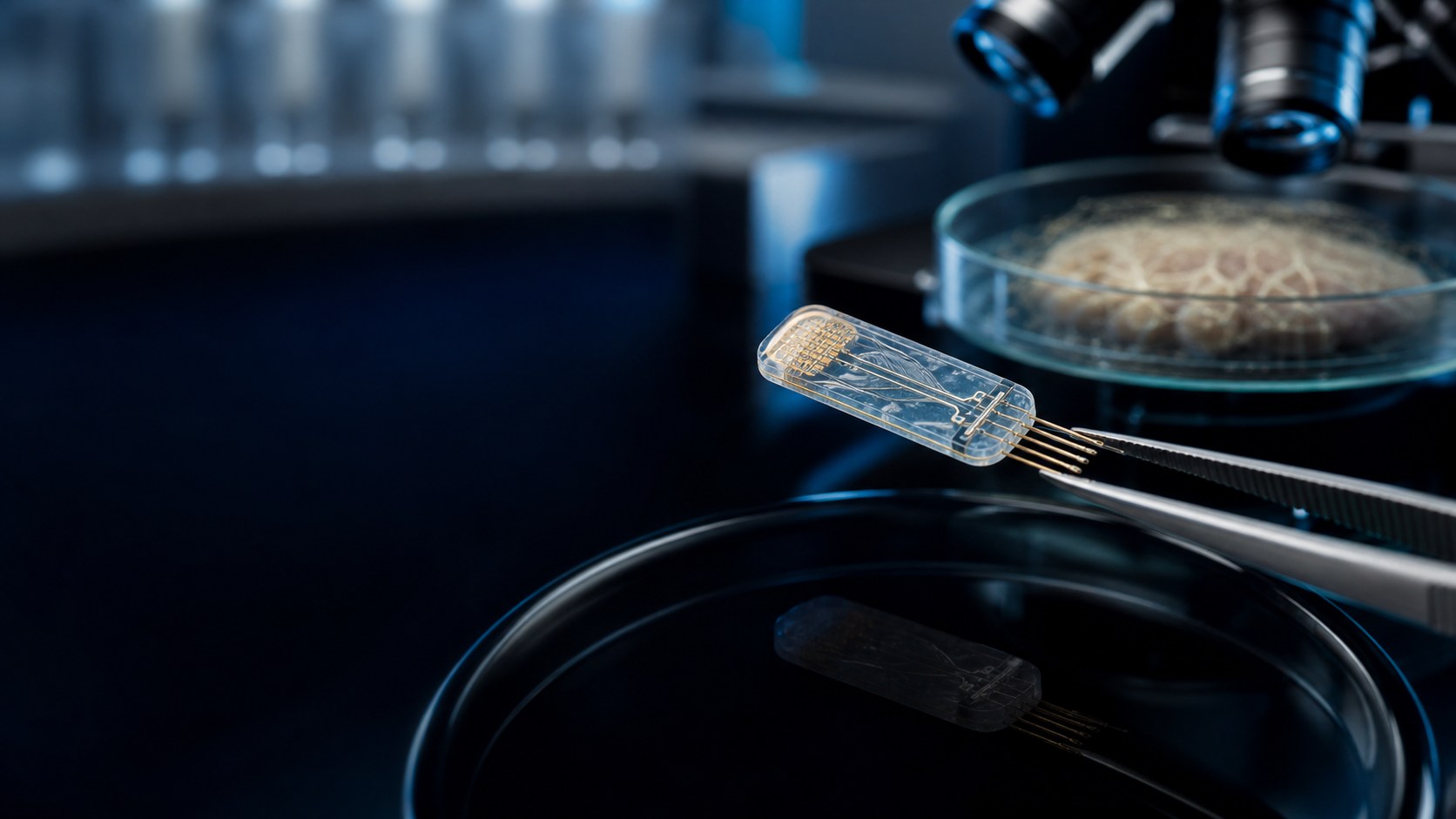
The Human Body Is Becoming a Connected Platform: The Rise of Smart Implants & Bioelectronics
The global healthcare industry is entering a profound technological transition where medical devices are evolving beyond passive treatment tools into intelligent, connected biological systems.
Smart implants and bioelectronics are emerging at the center of this transformation, redefining how diseases are monitored, how therapies are delivered, and how the human body interacts with technology itself.
From AI-enabled cardiac implants and neurostimulation systems to implantable biosensors and brain-computer interfaces, the industry is moving toward a future where medical technologies continuously communicate with the body in real time.
Healthcare is no longer limited to episodic hospital intervention. It becomes continuous, adaptive, personalized, and increasingly autonomous.
Key Takeaways
- Smart implants are shifting healthcare from reactive treatment to continuous biological intelligence.
- Bioelectronics combines implantable sensors, AI analytics, wireless connectivity, and real-time therapeutic adjustment.
- Cardiac implants, glucose monitoring, neurostimulation, and smart orthopedic implants are major use cases.
- Neurotechnology and brain-computer interfaces are emerging as major growth frontiers.
- The body itself is becoming part of the connected healthcare network.
Why smart implants are becoming strategic
Traditional healthcare systems are largely reactive. Treatment typically begins after symptoms appear, diagnoses are confirmed, and clinical intervention becomes necessary. Smart implants fundamentally disrupt this model.
These devices continuously collect physiological data, monitor internal biological conditions, and in some cases autonomously deliver therapeutic responses without requiring constant physician intervention.
- Reactive care toward predictive care
- Episodic treatment toward continuous monitoring
- Standardized medicine toward precision medicine
- External diagnostics toward embedded intelligence
The bio-digital ecosystem
Industry leaders such as Medtronic, Abbott Laboratories, Boston Scientific, and Neuralink are investing in intelligent implant technologies, neuroelectronics, AI-driven diagnostics, and next-generation therapeutic platforms.
The competitive landscape is moving beyond conventional medical devices toward integrated bio-digital ecosystems that combine implantable sensors, AI-powered analytics, wireless connectivity, neurostimulation systems, cloud-based health monitoring, and real-time therapeutic adjustment.
How smart implants transform disease management
The most significant impact of smart implants lies in their ability to create continuous biological intelligence. Instead of relying on periodic checkups and isolated diagnostic snapshots, physicians can increasingly access real-time physiological insights directly from implanted systems.
Cardiac implants monitor heart rhythms continuously and can automatically trigger corrective therapies during abnormal events. Implantable glucose monitoring systems are transforming diabetes management through real-time metabolic tracking and automated insulin optimization.
Neurostimulation devices are being used to treat chronic pain, epilepsy, Parkinson's disease, and neurological disorders through targeted electrical modulation of neural pathways. Smart orthopedic implants are also emerging with embedded sensors that monitor implant performance, patient mobility, and post-surgical recovery.
Why neurotechnology is a major growth frontier
One of the most disruptive segments within bioelectronics is neurotechnology. Brain-computer interfaces and neural implants are transitioning from research-stage innovation toward commercial healthcare applications.
Companies and research institutions are investing heavily in technologies capable of enabling direct communication between the human nervous system and digital devices.
- Neural signal decoding
- Cognitive interface systems
- Implantable neurostimulators
- Brain-controlled prosthetics
- AI-assisted neurological therapies
Regional leadership in smart implants
The United States remains the global leader in smart implant innovation due to its strong medtech ecosystem, advanced regulatory pathways, AI leadership, and concentration of neurotechnology startups.
Japan continues to lead in miniaturization technologies, precision electronics, and aging-focused healthcare innovation. Germany maintains strong positioning through biomedical engineering and implant manufacturing expertise.
China is rapidly emerging as a strategic force through investments in AI healthcare systems, semiconductor manufacturing, digital hospitals, and neurotechnology development. South Korea is strengthening its position through advanced electronics manufacturing, smart healthcare infrastructure, and bioengineering innovation.
The future of connected healthcare infrastructure
The next phase of healthcare evolution may no longer revolve around hospitals alone. Healthcare delivery is moving toward embedded, always-connected biological systems capable of continuously monitoring, diagnosing, and responding to internal physiological conditions.
Future smart implants could enable autonomous therapeutic delivery, real-time disease prediction, AI-driven treatment optimization, remote patient management, closed-loop bioelectronic therapies, and continuous digital health synchronization.
This transformation could alter healthcare economics by reducing hospitalization dependency, improving chronic disease management, and enabling earlier medical intervention at scale.
PREONZ Perspective: Strategic implications
Smart implants and bioelectronics are rapidly evolving into foundational technologies that could redefine the architecture of global healthcare over the next decade.
The market sits at the convergence of artificial intelligence, neuroscience, biotechnology, medical devices, semiconductor engineering, and digital health infrastructure.
In many ways, smart implants represent the transition from external healthcare systems toward internalized healthcare intelligence. The long-term vision is the emergence of a connected biological future where intelligent devices inside the body continuously enhance diagnosis, therapy, monitoring, and human health optimization.
Frequently Asked Questions
What are smart implants?
Smart implants are medical devices embedded in the body that can monitor biological conditions, communicate data, and sometimes adjust therapy in real time.
What is bioelectronics?
Bioelectronics combines biology, electronics, sensors, and software to monitor or modulate biological systems for diagnosis and therapy.
How do smart implants change healthcare?
They shift care from episodic intervention toward continuous monitoring, predictive insight, and personalized therapeutic response.
Why is neurotechnology important?
Neurotechnology enables direct interaction with the nervous system and may support cognitive rehabilitation, paralysis treatment, sensory restoration, and brain-computer interfaces.
Smart implants are turning healthcare into a connected biological platform. PREONZ helps teams evaluate where sensors, AI, neurotechnology, and medtech ecosystems create strategic opportunity.